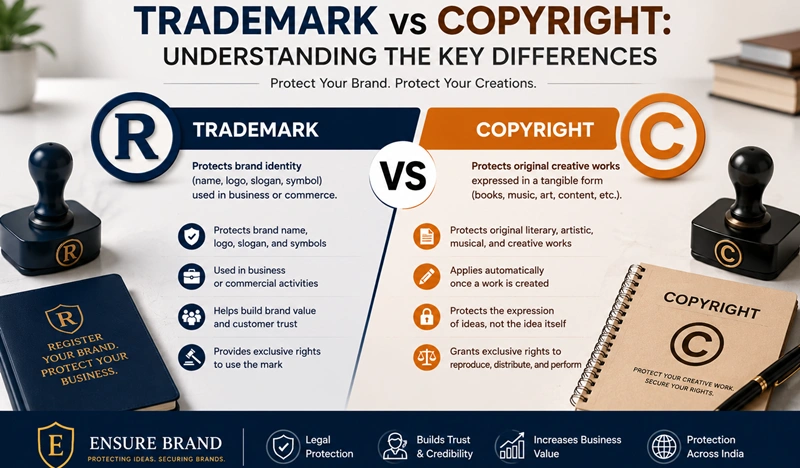
Trademark vs Copyright: Understanding the Key Differences
When starting or growing a business, protecting your unique assets is crucial. However, many entrepreneurs often get confused by legal terminology, specifically when choosing between a trademark and a copyright. Both are vital branches of intellectual property protection, but they serve entirely different purposes.
Protecting your business identity requires the right tool. Applying for the wrong type of legal shield can leave your business vulnerable to competitors. Let’s break down the ultimate battle of Trademark vs Copyright so you can make an informed decision for your brand.
What is a Trademark?
A trademark protects your brand identity in the marketplace. It focuses on commercial identifiers that help consumers distinguish your goods or services from your competitors. This includes your business name, logo, slogans, catchy taglines, product names, or even specific packaging styles. It essentially secures your brand’s reputation and grants you the exclusive right to use the ® symbol.
What is Copyright?
On the other hand, a copyright protects original creative expressions. It secures the actual tangible manifestation of an idea rather than a commercial name or brand logo. Under copyright registration India, creators protect things like written software code, blog articles, videos, music, books, photographs, painting designs, and website layouts from being illegally duplicated or used without authorization.
Key Differences Between Trademark and Copyright
| Feature | Trademark | Copyright |
|---|---|---|
| What it Protects | Brand Name, Logo, Taglines, Symbols. | Books, Videos, Software Code, Website Content. |
| Primary Purpose | Prevents customer confusion in the market. | Prevents unauthorized copying of creative work. |
| Symbol Used | ™ (Pending) or ® (Registered) | © (Copyright Symbol) |
| Validity Term | 10 Years (Renewable indefinitely). | Lifetime of the creator + 60 Years. |
Which Protection Does Your Business Need?
The straightforward answer is: Most active businesses need both! Here’s a quick scenario to understand how they work together for your company:
If you develop an application, your business name and application logo will require a Trademark so no competitor can sell software under your brand. Simultaneously, the underlying custom source code, design interface, user database structure, and video tutorials inside the application require a Copyright to stop someone from cloning your product.
🛑 Common Mistakes Businesses Make
- Confusing MCA Registration with IP Rights: Registering a company on the MCA portal does not automatically give you trademark rights.
- Delaying the Filing Process: Waiting too long allows rivals to register a matching trademark or copyright first, locking you out.
- Filing Under Wrong Classes: Choosing the incorrect trademark or copyright class during application results in immediate government rejection.
Expert Guidance from Ensure Brand
Intellectual property laws can be intricate. Filing documents blindly without proper statutory research often leads to delays, objections, or outright rejection. At Ensure, we help you legally map out your brand assets properly. Our dedicated legal specialists evaluate your business requirements, handle corporate documentation, and file your applications accurately under the right classes.
Protect Your Intellectual Property Today!
Don’t leave your brand name or creative content unprotected. Get immediate expert assistance for Trademark and Copyright registration.

Connect on WhatsApp